
Hair loss can be emotionally challenging, affecting confidence and self-image for both men and women. Fortunately, platelet-rich plasma injections for hair loss have emerged as a scientifically supported, minimally invasive solution. At Iron Mountain Orthopaedic Institute, Mark Ayzenberg, MD utilizes regenerative medicine principles to help patients naturally restore hair growth and scalp health.
This innovative therapy uses the body’s own healing components to stimulate dormant hair follicles, offering hope without surgery or harsh medications.
Platelet-rich plasma is a concentrated form of plasma derived from your own blood. It contains a high level of platelets, which are rich in growth factors responsible for tissue repair and regeneration. These growth factors play a vital role in healing injured tissues and stimulating cellular renewal.
PRP has been widely used in orthopedics, sports medicine, and wound healing long before gaining popularity in hair restoration treatments.
PRP therapy is recognized for its versatility. Physicians use it to treat joint pain, tendon injuries, and now hair loss. According to the American Academy of Dermatology, PRP shows promising results in improving hair density and thickness when administered correctly.
Hair follicles weaken due to genetics, aging, stress, or hormonal changes. Platelet-rich plasma injections for hair loss deliver growth factors directly into the scalp, where they improve blood supply, stimulate follicle stem cells, and extend the hair growth cycle.
Key growth factors such as PDGF, VEGF, and TGF-β promote collagen production, angiogenesis, and follicular repair. These biological signals help transform thin, fragile hair into thicker, healthier strands over time.
PRP therapy requires no incisions, stitches, or long recovery periods. Most patients resume normal activities the same day, making it an appealing option for busy individuals.
Because PRP uses your own blood, there’s no risk of allergic reaction. This natural approach aligns with patients seeking drug-free and hormone-free treatments.
Commonly known as male or female pattern baldness, androgenetic alopecia responds particularly well to PRP when treated early.
PRP can also support patients experiencing postpartum hair loss, menopause-related thinning, or stress-induced shedding by revitalizing weakened follicles.
A small amount of blood is drawn and placed into a centrifuge. This process separates platelet-rich plasma from other blood components, creating a concentrated healing solution.
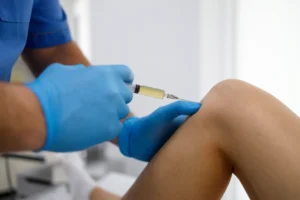
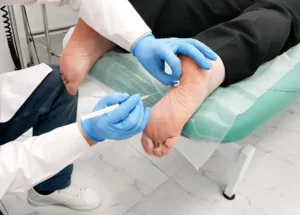
Using fine needles, Mark Ayzenberg, MD carefully injects PRP into targeted scalp areas. The procedure typically lasts 45–60 minutes and is well tolerated.
Dr. Ayzenberg brings extensive experience in regenerative and musculoskeletal medicine. His meticulous approach ensures that PRP treatments are customized to each patient’s condition and goals.
Iron Mountain Orthopaedic Institute integrates the latest medical research with cutting-edge techniques. Their PRP protocols prioritize safety, precision, and measurable outcomes.
PRP therapy is considered very safe. Mild redness, swelling, or tenderness at injection sites may occur but typically resolves within 24–48 hours. Serious complications are extremely rare.
Most patients notice reduced shedding within 2–3 months. Visible hair thickening often appears between 4–6 months, with optimal results after a series of treatments spaced several weeks apart.
| Treatment | Invasiveness | Downtime | Natural |
|---|---|---|---|
| PRP Therapy | Minimal | None |  |
| Hair Transplant | Surgical | Weeks |  |
| Topical Medications | None | None | |