
Mark Ayzenberg, MD, FAAOS
Extracorporeal shockwave therapy, commonly known as ESWT, has become an increasingly popular non-invasive treatment for tendon injuries, plantar fasciitis, arthritis, and certain calcific conditions.
But not every patient who tries shockwave therapy gets the same result.
Sometimes the difference has less to do with shockwave therapy itself and more to do with how the treatment is being used. The type of device, the condition being treated, where the treatment is applied, and what happens before and after each session can all affect the outcome.
At Iron Mountain Orthopaedic Institute, ESWT starts with a thorough evaluation rather than a standard treatment protocol.
One common misconception about ESWT is that its primary purpose is simply to reduce pain.
The treatment actually works by delivering acoustic pressure waves into targeted tissue. These waves create a controlled stimulus that encourages the body’s natural healing response, including increased local blood flow and processes involved in tissue repair.
For certain conditions, such as calcific tendinitis of the shoulder, shockwave therapy may also help break down calcium deposits.
The important thing to understand is that this process takes time. ESWT creates a stimulus for healing, but the body’s response continues well after the appointment ends.
That is why the treatment itself is only part of the equation.
Activity levels, rehabilitation, progressive loading, and other treatments may all play a role in what happens during the weeks that follow.
There is rarely one simple explanation.
In some cases, treatment may have been directed at the area that hurts without identifying why that area became irritated in the first place. In others, the device or treatment settings may not have been appropriate for the condition being treated.
Take chronic heel pain as an example.
A patient may receive shockwave therapy directly on the plantar fascia because that is where the pain is located. But if tight calf muscles or changes in walking mechanics are continually placing excessive stress on the plantar fascia, treating the heel alone may not address the entire problem.
The painful area matters, but so does the reason it became painful.
A thorough orthopaedic evaluation can help identify those contributing factors before treatment begins.
Not all shockwave therapy is the same.
Different devices deliver energy in different ways, and the appropriate option can depend on the location and depth of the tissue being treated.
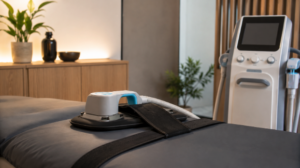
Iron Mountain Orthopaedic Institute has both focused and radial shockwave devices, allowing the treatment approach to be selected based on the patient’s condition rather than relying on a single device for every problem.
Treatment settings matter as well.
An Achilles tendon problem is different from calcific rotator cuff tendinitis. The location, depth, duration of the injury, and patient’s individual response all need to be considered when determining how treatment should be delivered.
Using the exact same protocol for every patient can overlook those differences.
Before beginning ESWT at Iron Mountain Orthopaedic Institute, Dr. Mark Ayzenberg evaluates more than the location of the pain.
The assessment may include imaging, movement patterns, medical history, previous treatments, the length of time symptoms have been present, and the patient’s goals.
This helps answer an important question: Is shockwave therapy actually the right treatment for this particular problem?
For some patients, the answer may be yes. For others, another treatment may need to come first, or ESWT may work better as part of a broader treatment plan.
The evaluation also helps determine whether the painful area is the source of the problem or the result of something happening elsewhere.
That distinction can make a significant difference in how treatment is approached.
Many patients do not hear about shockwave therapy until they have already spent months dealing with an injury.
By that point, the condition may have become chronic, and the tissue may respond differently than it would have earlier in the process.
That does not necessarily mean ESWT will not help. It does mean that chronic injuries may require a different approach and timeline.
Rather than viewing shockwave therapy only as a final option before surgery, it may be worth discussing earlier when a tendon or soft-tissue injury is not improving as expected with conservative care.
The goal is not to rush into another treatment. It is to understand the available options before the condition becomes harder to manage.
Another common mistake is focusing entirely on the treatment session and overlooking the recovery period afterward.
ESWT is designed to stimulate a healing response in the tissue. What the patient does during that period can influence recovery.
Immediately returning to the same activity or movement pattern that contributed to the injury may continue placing stress on the tissue.
Depending on the condition, patients may receive recommendations regarding activity modification, progressive loading, rehabilitation, or complementary treatments.
This does not mean patients necessarily need to stop being active. The goal is to give the treated tissue an appropriate environment to respond while gradually returning to normal activity.
Shockwave therapy is commonly used for chronic tendon and soft-tissue conditions, including problems involving the Achilles tendon, patellar tendon, rotator cuff, plantar fascia, and lateral elbow.
It may also be considered for certain calcific conditions and other musculoskeletal problems.
However, it is not appropriate for every diagnosis.
ESWT does not regenerate missing cartilage, repair a completely torn tendon, or replace surgery when a structural injury clearly requires surgical treatment. Certain medical conditions may also make shockwave therapy inappropriate.
That is another reason the evaluation comes first.
The goal should be to determine whether ESWT fits the patient’s condition rather than trying to make every condition fit ESWT.
At Iron Mountain Orthopaedic Institute, shockwave therapy is incorporated into a broader orthopaedic treatment strategy.
Dr. Ayzenberg reviews the patient’s imaging, symptoms, movement patterns, medical history, and goals before determining whether ESWT is appropriate.
When shockwave therapy is recommended, the treatment can then be adjusted based on the tissue involved, the depth of the injury, how long the condition has been present, and how the patient responds.
For some patients, ESWT may be used on its own. For others, it may be combined with rehabilitation or regenerative treatments such as PRP or BMAC when clinically appropriate.
The goal is not simply to perform shockwave therapy. It is to build a treatment plan around what is actually causing the patient’s symptoms.
ESWT is commonly used for tendon and soft-tissue conditions where healing has slowed or symptoms have become persistent. This can include plantar fasciitis, Achilles tendinopathy, patellar tendon problems, lateral elbow pain, rotator cuff conditions, and certain calcific conditions.
Whether ESWT is appropriate depends on the individual diagnosis and clinical findings.
Treatment plans vary depending on the condition and the individual patient. Many protocols involve several sessions spaced apart to allow the tissue time to respond.
Some patients begin noticing improvement during the treatment course, while others experience more noticeable changes in the weeks after treatment as tissue remodeling continues.
Patients may experience some discomfort during treatment, particularly when the therapy is applied to sensitive or injured tissue.
Treatment intensity can be adjusted based on the patient’s tolerance and the condition being treated. Temporary soreness following a session can also occur.
There are several possibilities.
The treatment may have been applied only to the painful area without identifying contributing biomechanical factors. The device or settings may not have been appropriate for the condition, or the patient may not have received enough guidance during the recovery period.
A previous unsuccessful experience with shockwave therapy does not automatically mean the treatment itself was inappropriate. A new evaluation can help determine what may have contributed to the previous result.
For some tendon, calcific, and soft-tissue conditions, ESWT may be included as part of a non-surgical treatment plan.
However, it cannot correct every structural problem. Completely torn tendons, advanced joint damage, and certain other conditions may require different interventions.
An orthopaedic evaluation can help determine what options are realistic for each patient.
In some cases, yes.
ESWT and regenerative treatments such as PRP or BMAC work differently and may be used together when appropriate. Whether combining treatments makes sense depends on the diagnosis, tissue involved, severity of the condition, and the patient’s overall treatment plan.
The best starting point is an orthopaedic evaluation.
At Iron Mountain Orthopaedic Institute, the assessment considers the patient’s imaging, symptoms, movement history, previous treatments, and goals before determining whether shockwave therapy is appropriate.
Patients dealing with persistent tendon or soft-tissue pain can call (215) 821-7059 to schedule a consultation with the Iron Mountain Orthopaedic Institute team.
This article is published by Iron Mountain Orthopaedic Institute, an advanced orthopaedic practice led by Dr. Mark Ayzenberg, FAAOS, a double board-certified and fellowship-trained orthopaedic surgeon. The practice specializes in minimally invasive orthopaedic surgery and regenerative medicine treatments including ESWT, PRP, BMAC, A2M, and MLS Laser Therapy, serving patients with joint pain, sports injuries, and degenerative conditions who are exploring treatment options and looking to return to the activities they value.