By Mark Ayzenberg, MD, FAAOS, Founder, Iron Mountain Orthopaedic Institute
Joint pain has a way of slowly narrowing your world. The golf round you skip, the grandkid you can’t chase, the morning where getting out of bed takes longer than it should. If you’ve started looking into PRP therapy, you’re probably past the point of hoping it resolves on its own.
Direct Answer
PRP therapy works by concentrating your own blood’s platelets and growth factors, then injecting them directly into damaged tissue to trigger a repair response that the body stopped mounting on its own. Strong results typically appear over 8 to 12 weeks, with meaningful improvement in pain and function for appropriate candidates. Weak results usually trace back to poor candidate selection, low-quality preparation, or targeting the wrong target.
Key Takeaways
- PRP is most effective for early-to-moderate joint degeneration, tendon injuries, and soft tissue damage where the body’s repair process has stalled
- Timeline matters: most patients notice a shift between weeks 6 and 12, not days 2 and 3
- The quality of the PRP preparation (platelet concentration, activation method, imaging guidance) directly determines how much of the treatment actually reaches the target tissue
- Not every joint and not every patient is a strong candidate; honest evaluation before treatment is what separates good outcomes from wasted ones
- Waiting to see if pain resolves on its own is rarely neutral; it often allows further degeneration that narrows your options later
What Is PRP, and Why Does It Work the Way It Does?
Platelet-rich plasma (PRP) is a concentration of your own blood’s platelets, growth factors, and bioactive proteins, prepared by spinning a blood draw in a centrifuge to separate and concentrate the therapeutic components. The mechanism isn’t complicated once you understand what platelets actually do: in normal healing, platelets rush to an injury site and release growth factors that signal surrounding cells to proliferate, build new tissue, and reduce destructive inflammation.
The problem in chronic joint conditions is that the body’s repair signal has gone quiet. A degenerating knee or a chronically irritated rotator cuff tendon exists in a low-oxygen, low-nutrient environment where the normal healing cascade doesn’t fire reliably. PRP re-initiates that signal by flooding the area with a concentrated dose of the same molecular messengers the body would use in response to a fresh injury.
That’s the mechanism that makes PRP different from a cortisone injection. Cortisone suppresses inflammation and provides symptom relief. PRP asks the tissue to repair itself. One is a pause; the other is an attempt at a restart.
What Does a Strong PRP Result Actually Look Like?
Consider a typical scenario: a 58-year-old active golfer with moderate medial knee osteoarthritis and persistent pain that’s been limiting his game for two years. He’s had cortisone injections that helped for six weeks at a time, but the relief window keeps getting shorter. After a thorough evaluation confirming he’s a good candidate, he receives a PRP injection prepared under imaging guidance to confirm accurate placement.
Weeks 1 to 3: mild soreness at the injection site, possibly a temporary flare in symptoms as the inflammatory response activates. This is normal and expected. It means the treatment is doing something.
Weeks 4 to 6: the soreness settles. Some patients notice small functional improvements, less morning stiffness, and slightly better range of motion.
Weeks 8 to 12: This is where meaningful change typically shows up. Pain scores drop, activity tolerance increases, and patients often report getting back to activities they’d quietly given up.
The result isn’t a cure. It’s a meaningful reduction in pain and a restoration of function that, for the right candidate, can delay or avoid surgical intervention for years.
Why Do Some PRP Treatments Fail?
This is the question most patients don’t think to ask before they commit to treatment, and it’s the most important one.
PRP failure usually comes down to one of three things.
First, candidate mismatch. PRP works on tissue that still has enough biological capacity to respond. Severely degenerated joints with bone-on-bone contact and minimal remaining cartilage don’t have the cellular infrastructure to respond to growth factor signals. Injecting PRP into a joint that’s past the point of biological repair is like watering a plant that’s already dead. The treatment isn’t wrong; the selection was.
Second, preparation quality. Not all PRP is the same. The platelet concentration, the presence or absence of red blood cells (which can be inflammatory), and the activation method all affect what you’re actually injecting. A poorly prepared sample may have a platelet concentration barely above baseline. The difference between a therapeutic dose and a subtherapeutic one isn’t visible to the patient.
Third, delivery accuracy. Even a well-prepared sample injected without imaging guidance can miss the target. In a shoulder with complex anatomy or a hip joint surrounded by soft tissue, freehand injection placement is genuinely difficult. Ultrasound or fluoroscopic guidance confirms the needle is where it needs to be.
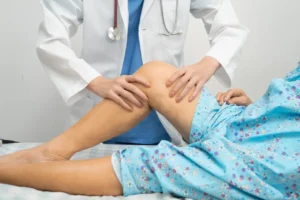
At Iron Mountain Orthopaedic Institute, the evaluation before a PRP recommendation is as important as the injection itself. Dr. Ayzenberg’s approach is to determine whether PRP is the right tool before discussing its availability.
If you’re weighing whether PRP is appropriate for your specific situation, a consultation with Dr. Ayzenberg at Iron Mountain Orthopaedic Institute gives you an honest answer before you commit to anything. Call (215) 821-7059 to schedule.
The PRP Candidate Spectrum: A Decision Framework
The Repair Capacity Framework is a way of thinking about PRP candidacy based on the tissue’s remaining biological potential, not just the severity of symptoms.
Use this framework to understand where you likely fall:
| Patient Profile | Tissue State | PRP Likely Outcome |
|---|---|---|
| Early degeneration, active, good baseline health | High repair capacity | Strong candidate; meaningful improvement likely |
| Moderate degeneration, some activity limitation | Moderate repair capacity | Good candidate; improvement probable with proper prep and placement |
| Advanced degeneration, significant structural loss | Low repair capacity | Weaker candidate; may benefit from a combination approach or a surgical consult |
| Bone-on-bone, end-stage OA | Minimal repair capacity | PRP alone is unlikely to produce meaningful change; surgical evaluation is warranted |
| Acute tendon or soft tissue injury | High repair capacity | Strong candidate; PRP accelerates what the body is already trying to do |
Use this when deciding whether to pursue PRP: the question isn’t “is PRP available?” It’s “Does my tissue have enough left to respond?”
How Does PRP Compare to Other Conservative Options?
The honest comparison isn’t PRP vs. surgery. It’s PRP vs. the other non-surgical options you’ve probably already tried or been offered.
Cortisone injections reduce inflammation and provide faster symptom relief, often within days. But they don’t repair tissue, and repeated use can actually accelerate cartilage breakdown over time. They’re useful for acute flares and for buying time, not for changing the trajectory of degeneration.
Hyaluronic acid injections (viscosupplementation) lubricate the joint and can reduce pain in mild-to-moderate osteoarthritis. They don’t stimulate repair either. Think of them as maintenance, not treatment.
Physical therapy addresses the muscular and biomechanical contributors to joint stress. It’s essential, and it works better when the underlying tissue is less inflamed and more functional. PRP and physical therapy are frequently used together at Iron Mountain Orthopaedic Institute because each makes the other more effective.
BMAC (bone marrow aspirate concentrate) is a step beyond PRP, using stem cell-rich material from your own bone marrow for more advanced degeneration. For patients who are strong PRP candidates, PRP is typically the starting point. For those with more significant structural damage, BMAC may be the more appropriate tool.
The category reframe that matters here is that PRP isn’t a pain management treatment. It’s a tissue biology intervention. Thinking of it as a better cortisone shot is the wrong frame entirely, and it’s why some patients are disappointed when it doesn’t act like one.
Who Is PRP Not Right For?
Straight answer: PRP isn’t the right first step for everyone, and saying so is part of how Iron Mountain Orthopaedic Institute earns trust.
PRP is unlikely to produce meaningful results if your joint has reached end-stage degeneration with severe structural loss. It’s also not appropriate as a standalone treatment for acute fractures, infections, or conditions requiring immediate surgical intervention. Patients with certain blood disorders or active malignancies aren’t candidates.
It’s also not a fast fix. If you need to be pain-free in two weeks for a specific event, PRP’s 8-to-12-week timeline doesn’t serve that need. Cortisone might be the right bridge while you pursue longer-term repair.
The most expensive mistake isn’t choosing PRP and not responding. It’s waiting through years of worsening degeneration because nothing felt urgent enough to address, and then arriving at a consultation where the only remaining option is replacement.
Frequently Asked Questions
How long does it take to know if PRP is actually working?
Most patients start noticing meaningful change between weeks 6 and 12 after injection. The first few weeks often involve a temporary increase in soreness as the inflammatory repair process activates, which is expected and doesn’t mean the treatment isn’t working. Judging PRP by how you feel at week two is like judging a bone fracture’s healing by how it feels the day after casting.
Does it matter where I get PRP done?
Yes, significantly. The preparation method, platelet concentration, use of imaging guidance during delivery, and the accuracy of the initial candidate evaluation all affect whether the treatment reaches the intended tissue at a therapeutic dose. PRP from a well-equipped, experienced orthopaedic practice isn’t the same product as a generic injection from a facility that doesn’t specialize in musculoskeletal care.
Can PRP actually help me avoid a knee or hip replacement?
For the right candidate, yes. PRP won’t reverse end-stage joint destruction, but for patients with early-to-moderate degeneration, it can meaningfully slow progression and restore enough function to delay or avoid replacement surgery. The keyword is “candidate.” An honest evaluation is the only way to know whether that applies to your specific joint and your specific imaging.
Is PRP painful to receive?
The injection itself involves a blood draw and then the injection into the joint or tissue, which most patients describe as moderate discomfort similar to a cortisone injection. The days that follow can involve a flare of soreness. Numbing agents are used to manage the procedure itself. Most patients find it manageable, particularly when weighed against the alternative of ongoing pain or surgery.
How many PRP injections will I need?
It depends on the condition being treated and how you respond. A single injection is the starting point for many soft tissue and early joint conditions. Some patients benefit from a series of two or three injections spaced several weeks apart, particularly for more significant degeneration. Dr. Ayzenberg evaluates the response before recommending additional treatment rather than defaulting to a preset protocol.
Is PRP covered by insurance?
Most insurance plans currently classify PRP as investigational for musculoskeletal conditions and don’t cover it. That’s a real cost consideration. The relevant comparison isn’t PRP vs. free; it’s PRP now vs. the cost, recovery time, and risk profile of a joint replacement or surgical procedure later. For many patients, the math favors earlier intervention.
What happens if PRP doesn’t work for me?
If PRP doesn’t produce meaningful improvement, that information is clinically valuable. It helps clarify whether the tissue’s repair capacity is lower than imaging suggested, and it informs the next decision, whether that’s a different regenerative approach like BMAC, a combination treatment, or a surgical consultation. A non-response isn’t a dead end; it’s a data point that sharpens the path forward.
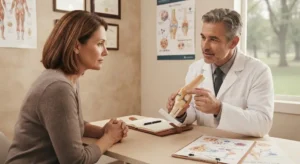
If you’re in the Huntingdon Valley area and you’re tired of managing joint pain without a clear plan, Iron Mountain Orthopaedic Institute offers the kind of appointment where you actually get answers. Dr. Ayzenberg spends real time with patients, explains what the imaging shows, and tells you honestly whether PRP is likely to help you. Call (215) 821-7059 to schedule a consultation.
About the Author
Mark Ayzenberg, MD, FAAOS, is the founder of Iron Mountain Orthopaedic Institute and a double board-certified, fellowship-trained orthopaedic surgeon specializing in sports medicine, arthroscopy, and regenerative orthopaedics. He graduated cum laude from the University of Pennsylvania, earned his medical degree with highest honors from what is now Geisinger Commonwealth School of Medicine, and completed fellowship training in Sports Medicine, Arthroscopy, and Reconstructive Surgery at Southern California Orthopedic Institute. Iron Mountain Orthopaedic Institute serves patients in Huntingdon Valley, PA, with a focus on minimally invasive and non-surgical solutions, including PRP, BMAC stem cell therapy, A2M, MLS Laser Therapy, and ESWT.